Misinformation is something most people run into almost every day especially now with social media. There are a lot of tools now trying to teach people how to recognize it. The examples I have done are the News Literacy Project’s RumorGuard and the game Bad News. Even though they have the same goal, they go about it in very different ways.
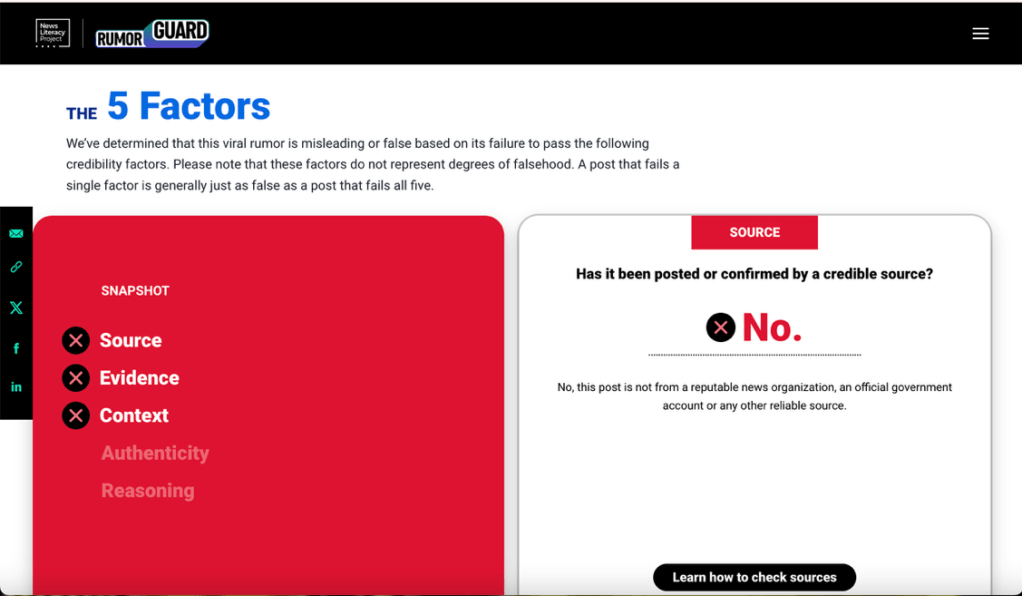
RumorGuard is more of a traditional learning tool. It shows you examples of viral posts or claims and then explains whether they are true, false, or misleading. It also breaks down why something is misinformation by pointing out things like lack of evidence, misleading wording, or missing context. Using it is pretty simple. You can just click through different examples and read the explanations.
I think RumorGuard is helpful because it clearly shows how misinformation works in real life. It teaches you what to look for when you are scrolling online which is definitely useful. At the same time, it can feel a little repetitive and not super exciting. It is informative, but it does not pull you in or keep you engaged for a long time. It does do a good job of building a basic understanding of how misinformation is identified and fact-checked.
On the other hand, the game Bad News takes a completely different approach. Instead of spotting misinformation, you actually create it. The game has you choose between two options at a time to grow your following and influence. The goal seems to be to keep the game going by making choices that attract attention even if they are misleading or extreme.
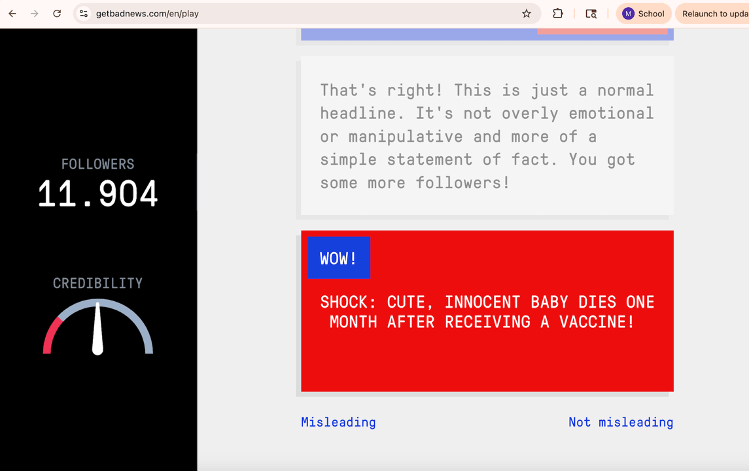
What stood out to me was how the game showed the relationship between credibility and popularity. Sometimes when my credibility went up, I lost followers, but when I posted more ridiculous or exaggerated content, I gained more. That really made it clear that misinformation spreads because it grabs attention and not because it is accurate. The game was also really easy to understand and quick to play which made it more enjoyable than something longer and slower like Breaking Harmony Square.
Overall, I thought Bad News was a really effective way to teach about misinformation. It was interactive and kind of fun which made the message stick more. Compared to lectures, it felt like a better way for me to learn because I was actively making decisions instead of just reading or listening.
In general, I think educational games and interactive tools are a great way to teach topics like misinformation. They make learning more engaging and help people understand concepts on a deeper level. Even research supports this idea. For example, a study published in the journal Science Advances found that playing games like Bad News can improve people’s ability to recognize misinformation techniques.
However, with that being said, I do not think games should completely replace other tools. Something like RumorGuard is still useful for explaining things clearly and providing real examples. So, when you combine both approaches, it probably creates the best learning experience overall.
References:
News Literacy Project (RumorGuard) https://www.getbadnews.com/en
Roozenbeek, J., & van der Linden, S. (2020). Fake news games confers psychological resistance against online misinformation. https://www.nature.com/articles/s41599-019-0279-9
 lowork
Leave a comment