Why I Questioned This Claim
I recently came across a TikTok video claiming that eating late at night causes weight gain. I have heard similar advice before, like people saying you should never eat after 8 PM. This claim stood out to me because it is very common and sounds convincing, but it also seemed a little too simple. Weight gain seems like it would depend on more than just the time you eat. The video also did not include any scientific evidence or sources which made me skeptical. So, because of this, I decided to investigate whether this claim is actually true.
Step 1: Identifying the Claim
The first thing I did was pause and clearly define the claim. The main idea being presented was eating late at night directly causes weight gain. Breaking the claim down helped me focus on what I needed to verify. This claim is specifically about the timing of eating, not just what types of food are being consumed.

Step 2: Investigating the Source
Next, I looked at the source of the claim. The TikTok was posted by a content creator who shares general health and lifestyle advice. However, they did not list any medical credentials or provide sources to support their claim. The video was also very short and did not explain how eating late at night would cause weight gain.
This raised several red flags for me. 1.) No scientific evidence was provided. 2.) The claim was presented as a strict rule. 3.) The creator did not appear to be a medical professional.
So, I decided to verify the information using more reliable sources.

Step 3: Checking Credible Sources
Instead of relying on the TikTok, I used lateral reading and searched:
“Does eating late at night cause weight gain”
I looked for information from trusted health organizations such as Northwestern University and Healthline. These sources are known for providing evidence-based medical information.
Both sources explained that weight gain is mainly influenced by total calorie intake and physical activity, not just the time of day that someone eats.
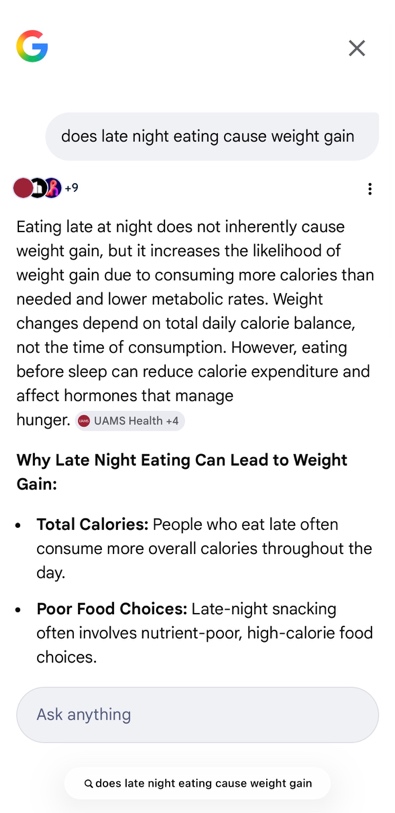
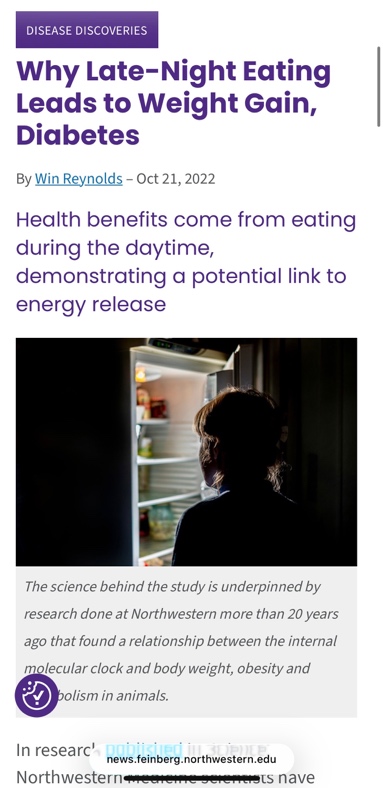
Step 4: Examining the Evidence
As I read more, I learned that eating late at night does not automatically cause weight gain. Instead, weight gain occurs when a person consumes more calories than their body uses over time.
However, there are some important details that help explain why this claim is so common.
- People who eat late at night may consume extra calories
- Late-night eating is often associated with unhealthy snacks
- Daily habits and lifestyle play a major role
For example, information from Healthline explains that calorie balance is the key factor in weight gain regardless of when food is eaten.
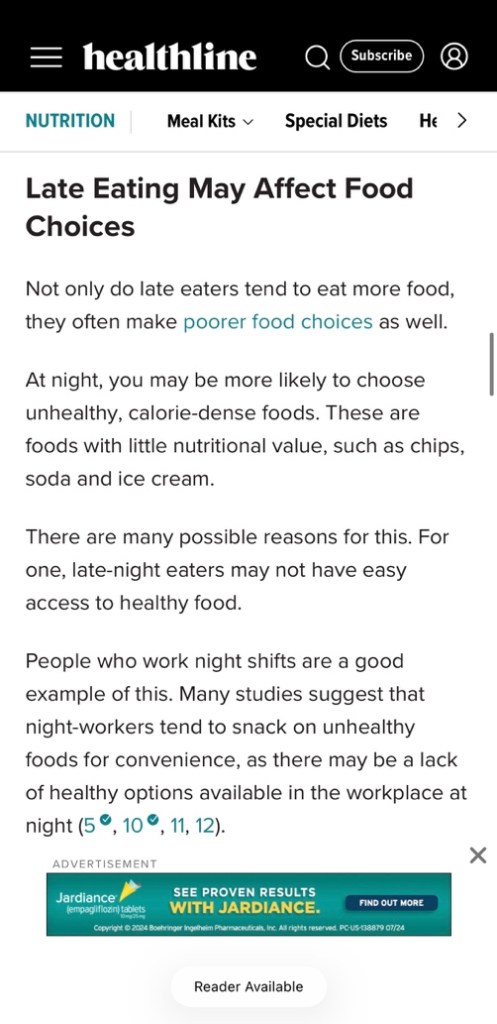
Step 5: Comparing Multiple Sources
To make sure the information was accurate, I checked several different sources. Most credible websites agreed on the same points which are that timing alone does not cause weight gain, overall diet and physical activity matter more, and late-night eating may contribute indirectly through habits.
Seeing consistent information across multiple reliable sources made me more confident in my conclusion.
Step 6: Evaluating the Claim
Finally, I looked back at the original TikTok and evaluated how the claim was presented. The video used simple and absolute language, suggesting that eating late automatically leads to weight gain. This is a red flag because scientific information is usually more detailed and includes context.
The claim leaves out important information which can make it misleading.
Conclusion: Final Assessment
After completing this process, I concluded that the claim is misleading rather than completely true or false. Eating late at night does not directly cause weight gain. Instead, weight gain is mainly determined by total calorie intake and physical activity. However, eating late at night can lead to behaviors like overeating or unhealthy snacking which may contribute to weight gain over time.
This investigation showed me how important it is to question common claims, especially when they are presented without evidence. By stopping, checking the source, and comparing information from reliable organizations, I was able to better understand the issue. I believe more people should take the time to verify information like this, because misinformation can easily spread and influence everyday decisions.
Sources:
Meixner, M. (2018, October 2). Does eating late at night cause weight gain?. Healthline. https://www.healthline.com/nutrition/eating-at-night#food-choices
Reynolds, W. (2022, October 21). Why late-night eating leads to weight gain, diabetes. News Center. https://news.feinberg.northwestern.edu/2022/10/21/why-late-night-eating-leads-to-weight-gain-diabetes/
 lowork
Leave a comment